
Shopping Your Home: Refreshing My Favorite Console Corner
There's a reason dark, traditional wood furniture keeps finding its way back into homes — it has presence. A heavy sideboard, an heirloom cabinet, a console with some age on it — these pieces carry character that newer furniture just can't fake. But here's the honest part: that same gravity can tip into feeling stiff, formal, or even a little dated if the styling around it doesn't pull its weight.
I've been slowly working on the corner of my home with exactly this problem — a dark piece with a lot of personality, surrounded by frames, objects, and a lamp that needed a little editing. Here's how I refreshed it without buying anything new — just by shopping my own home and rearranging what I already had with a few simple principles in mind.
Principle One: Light & Reflection
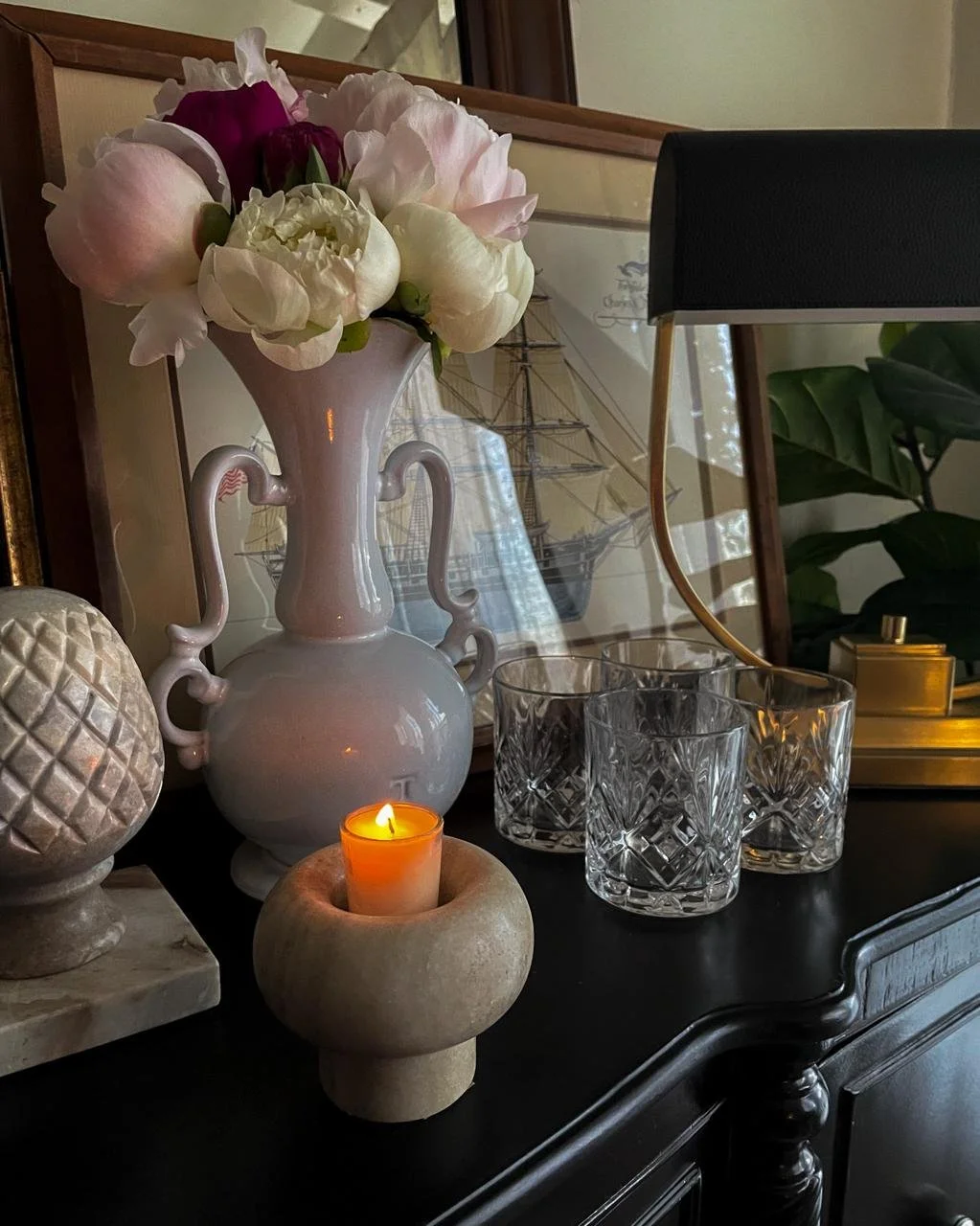
Dark wood absorbs light, so the easiest way to lift a heavy surface is to bring in things that bounce it back. My set of crystal glassware (Zara Home) does exactly this — every facet catches whatever light is in the room and throws it back, breaking up the flatness of the dark cabinet top.
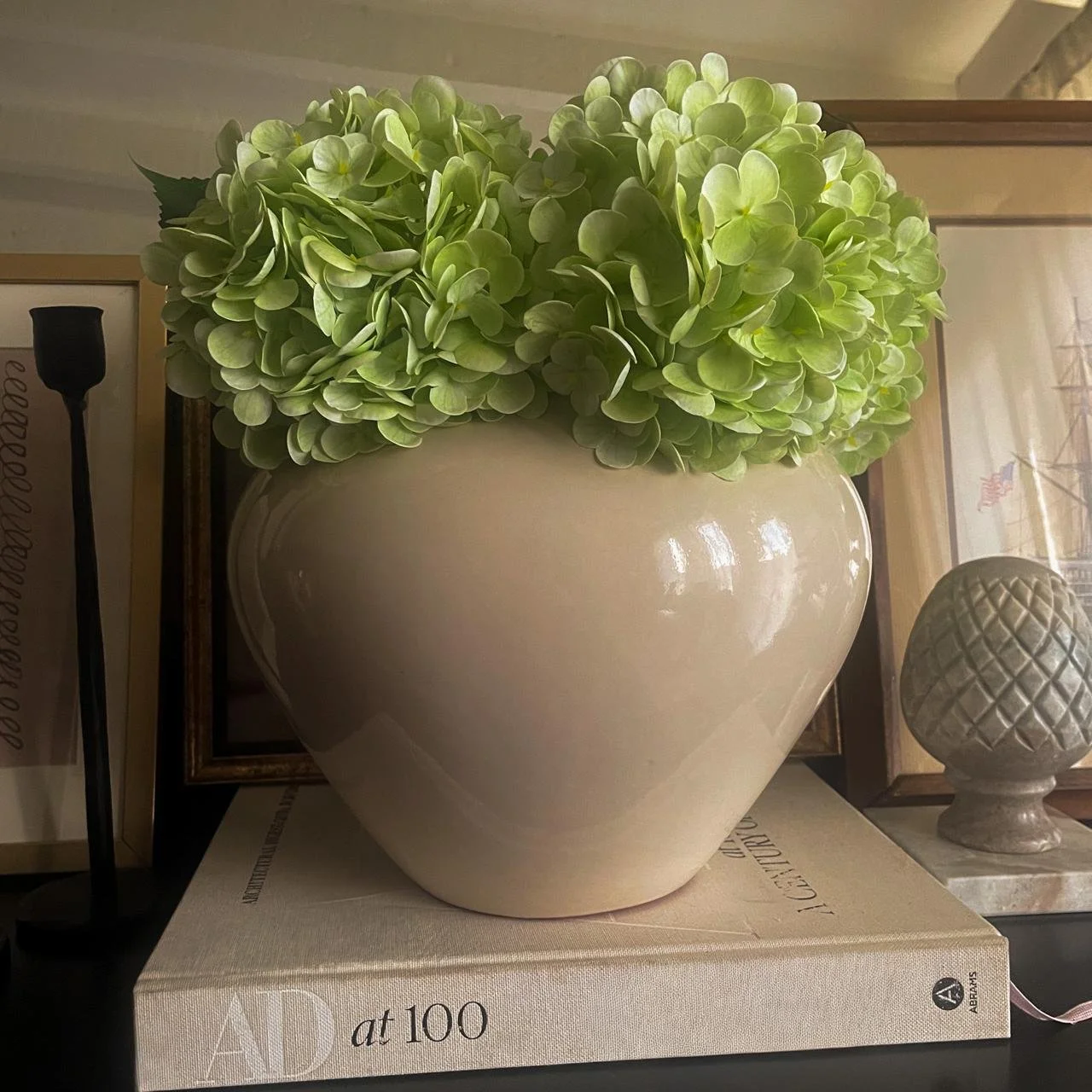
The glazed ceramic vase (Trinitate) does similar work in a softer way. Its glossy finish reflects just enough to keep the eye moving, even before you factor in what's in it. Shiny, light-catching textures like glass and glazed ceramic are some of the hardest-working tools against a dark wood surface — they don't compete with the furniture, they just give it something to play off of.
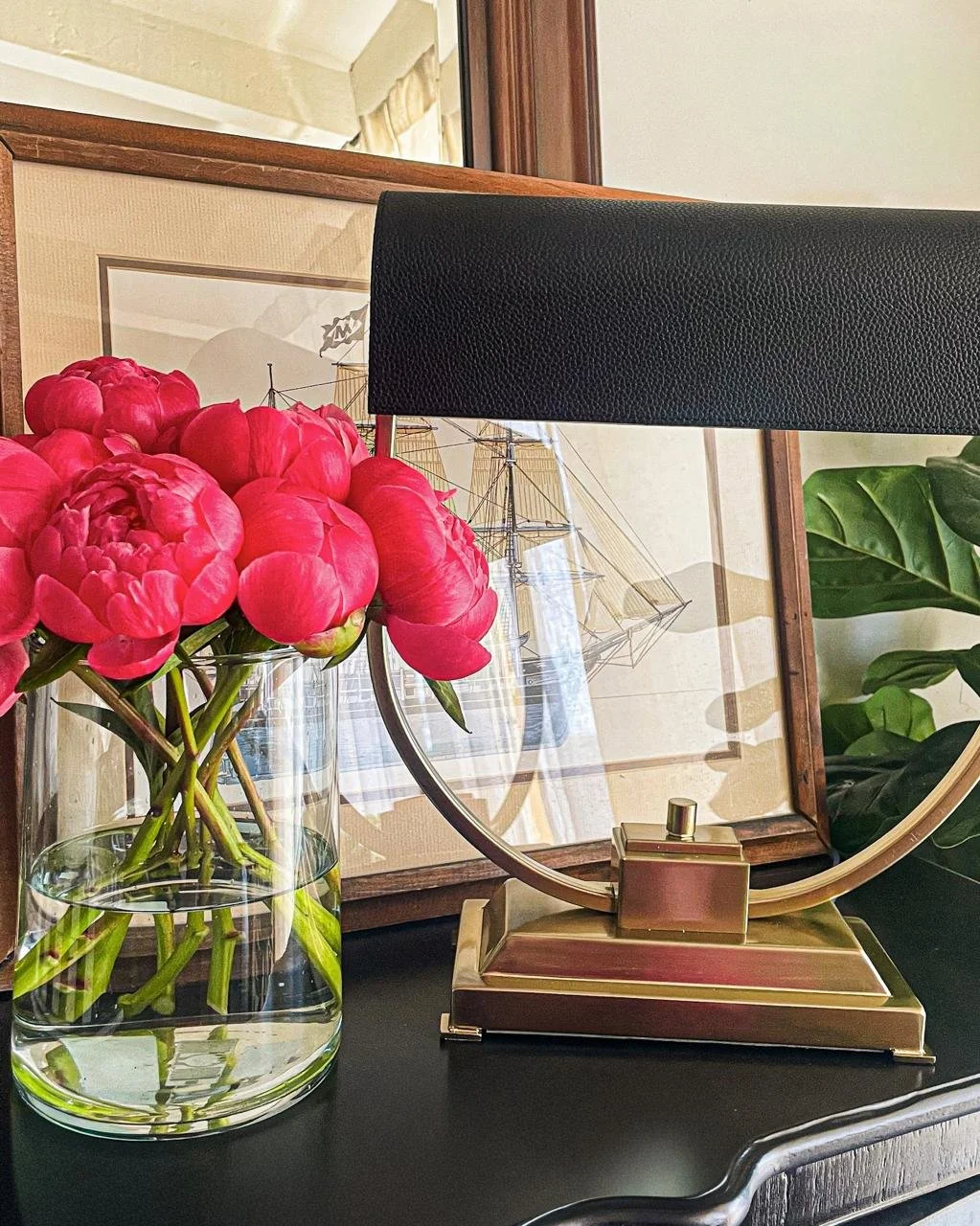
While glass and silver are classic choices, my absolute favorite design secret is introducing high-quality, warm metals like brass.
By placing a statement piece like this brass banker's-style lamp next to a vibrant arrangement of peonies, you instantly elevate the entire vignette. The polished brass catches the ambient light of the room, throwing a warm, golden glow across the dark wood tabletop.
Meanwhile, the rich grain of the leather shade provides a beautiful, sophisticated depth that bridges the gap between the traditional wood and the soft, organic texture of the flowers. It creates a layered, deliberate look that feels incredibly premium.
Principle Two: Organic Textures
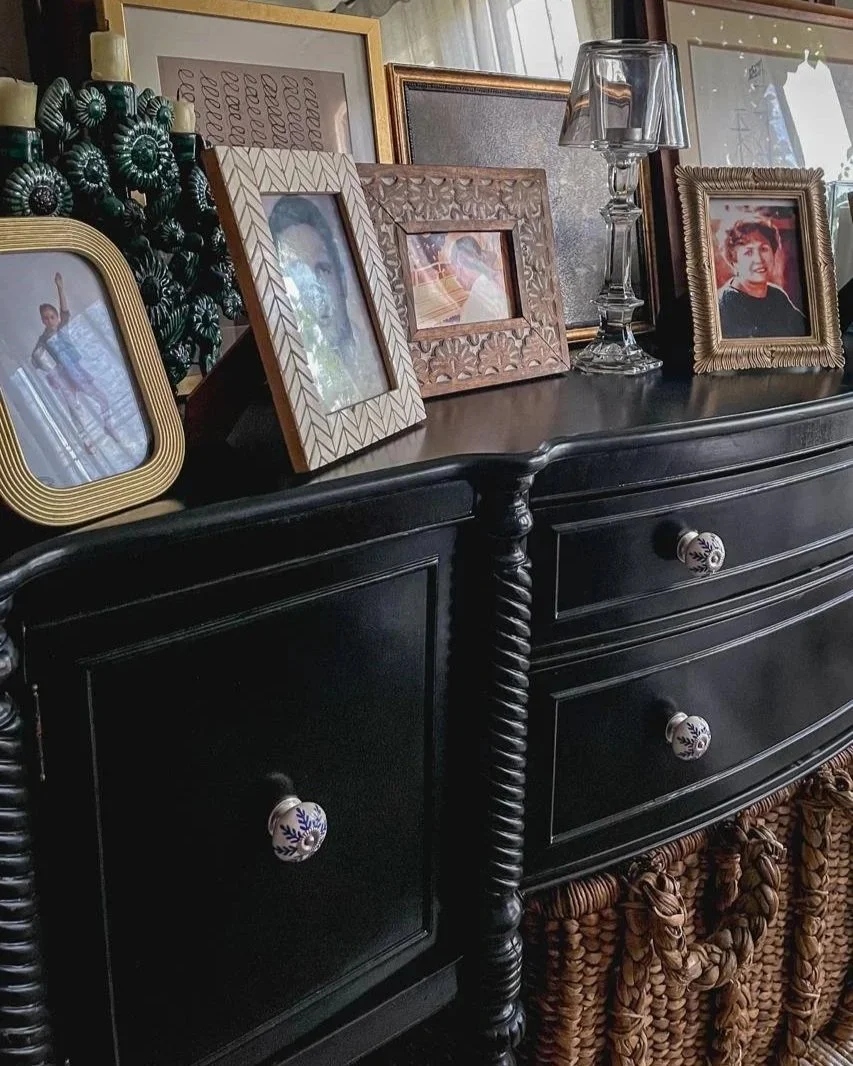
The second move is texture, specifically natural fiber textures. A variety of frames in a woven or textured material does double duty here, softening the formality of a gallery wall the way a smooth gold frame never could.
Underneath the cabinet, an oversized woven basket (Pottery Barn) grounds the whole piece. Natural fibers like rattan and wicker have an immediate relaxing effect on a room — they read as collected and lived-in rather than matched and formal, and they're the fastest way to take a "showroom" piece and make it feel like part of a real home.
Principle Three: Soft, Natural Shapes
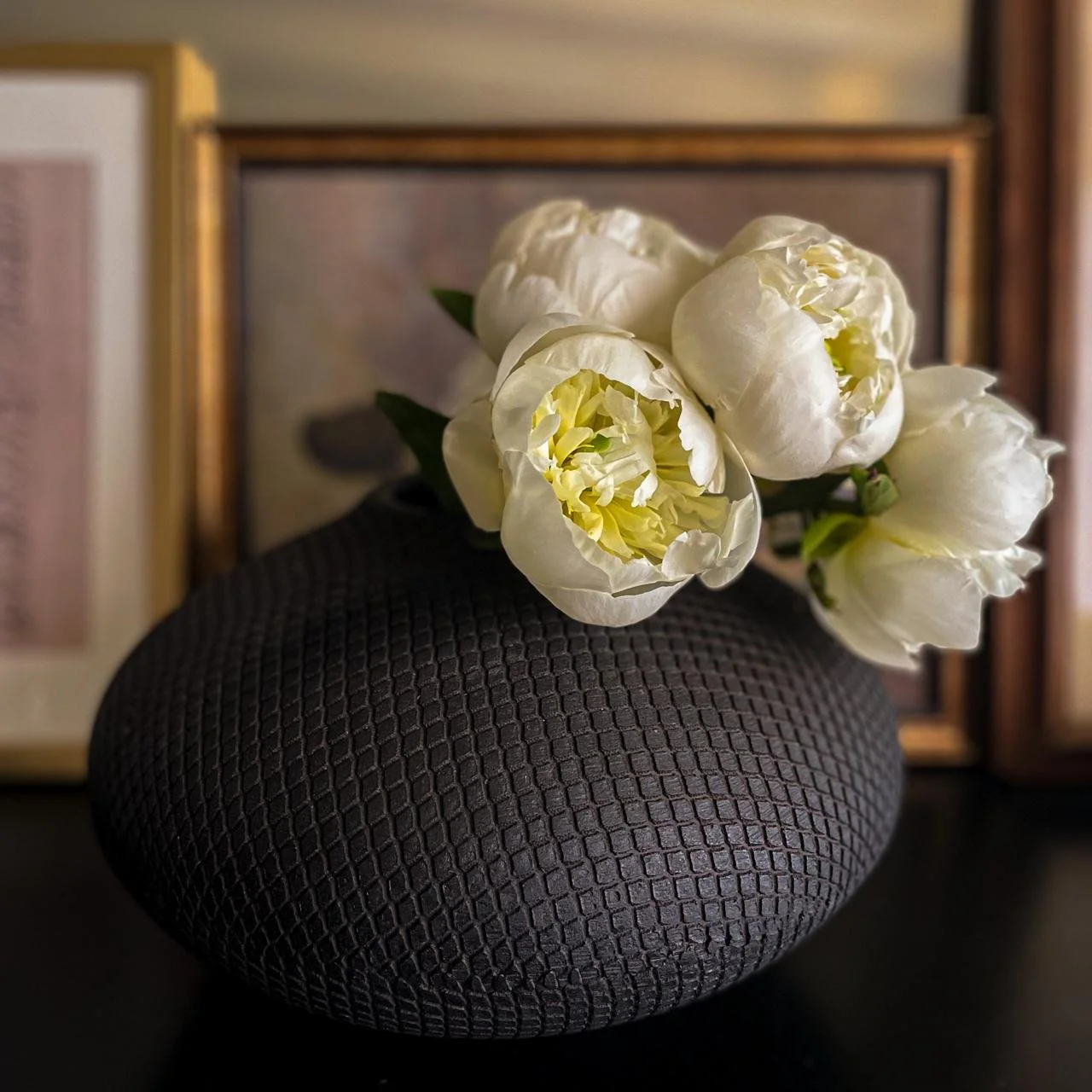
The last principle is about silhouette. Traditional furniture is full of straight lines, sharp edges, and right angles — so anything round and unstructured creates instant contrast. My matte black textured vase holding white peonies is the perfect example. The vessel itself is round and organic, and the blooms inside are soft, full, and a little wild — nothing about that combination is rigid. Mine is from CB2, but I found this nearly identical version on Amazon for a few dollars less — linked at the end of this post if you want to recreate the look.
This is honestly my go-to trick: pairing round, organic vessels with fluffy, unstructured blooms like hydrangeas and peonies. The contrast between those soft shapes and the straight lines of a traditional cabinet or frame does more to modernize a space than almost anything else I've tried.
The Takeaway
None of this required a shopping trip. It just took looking at what I already had — glassware, a vase, a basket, some blooms — and thinking about light, texture, and shape instead of "matching."
If you have a corner in your home that feels a little heavy or formal, my challenge to you this weekend is simple: clear it off completely, and then build it back up using only things you already own. Beautiful hosting and intentional living don't require buying all new things. Sometimes it's just about rearranging what you already love into a new, beautiful puzzle.
For reference, here's where a few of these pieces are from — though chances are you have something similar already tucked away.
This post contains affiliate links — thank you for supporting this space.